You’ve bought an EV and picked a wall charger brand. Then you hit a question most people never think about: do you want the cable attached or not? It sounds like a small detail. In practice, it shapes how you charge every night, where the charger can go and what upkeep looks like down the track.
As licensed electricians based in Donvale, we install home chargers across Melbourne’s eastern suburbs. This is one of the first things we talk through on site. Here’s a clear breakdown of tethered vs socketed EV chargers so you can decide before installation day.
Not Sure Which Charger Suits You?
Tell us where you park, what you drive and whether you plan to change cars. We’ll help you pick between tethered and socketed.
Call Us On
Key Takeaways :
- A tethered charger has a fixed cable. A socketed charger has an outlet, and you plug in your own cable.
- Both charge at the same speed when the power rating is the same.
- Tethered suits one car parked in the same spot each night.
- Socketed suits outdoor installs, multiple EVs or varied parking.
- Your parking layout matters more than the brand you choose.
What Is a Tethered EV Charger?
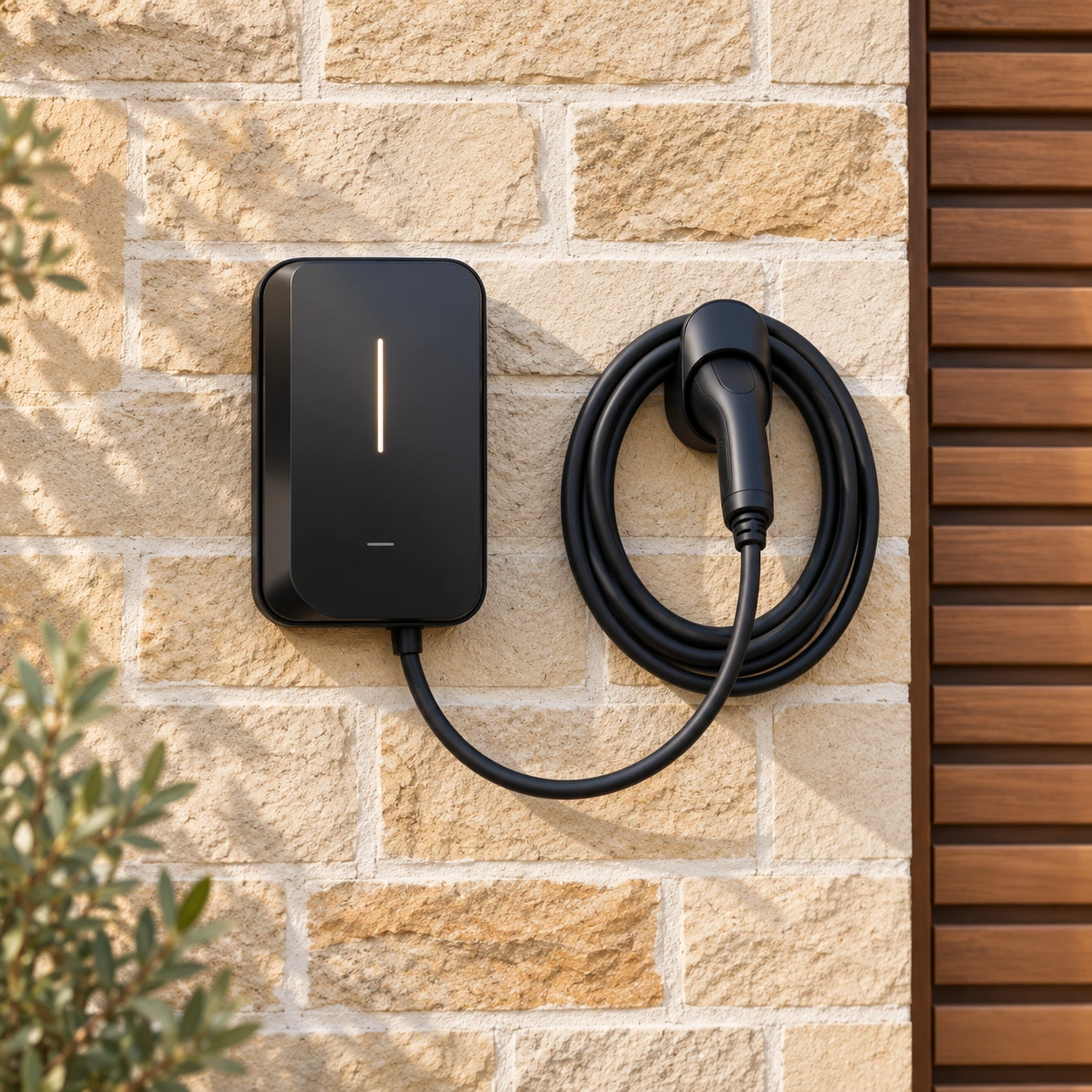
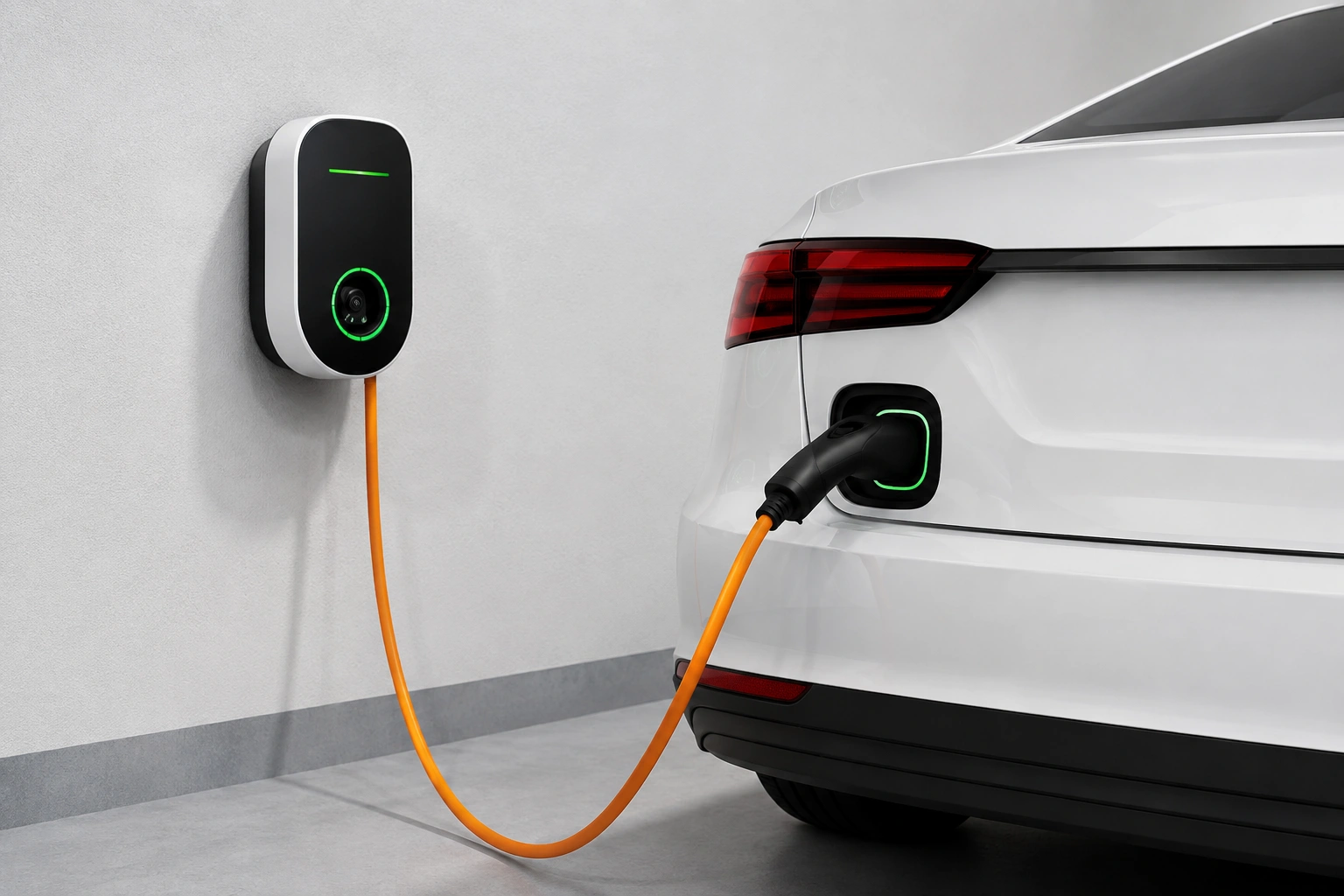
A tethered charger has its charging cable permanently connected to the wall unit. The other end has a plug that goes straight into your car. For most EVs sold in Australia, that plug is Type 2. When you’re finished, you coil the cable back onto its holster.
Think of it like having a petrol bowser at home. Pull in, plug in, walk inside. There’s nothing to grab from the boot and nothing to forget.
The cable stays on the wall, so you’ll still want a portable cable in the car for public AC chargers that don’t supply one.
What Is a Socketed EV Charger?
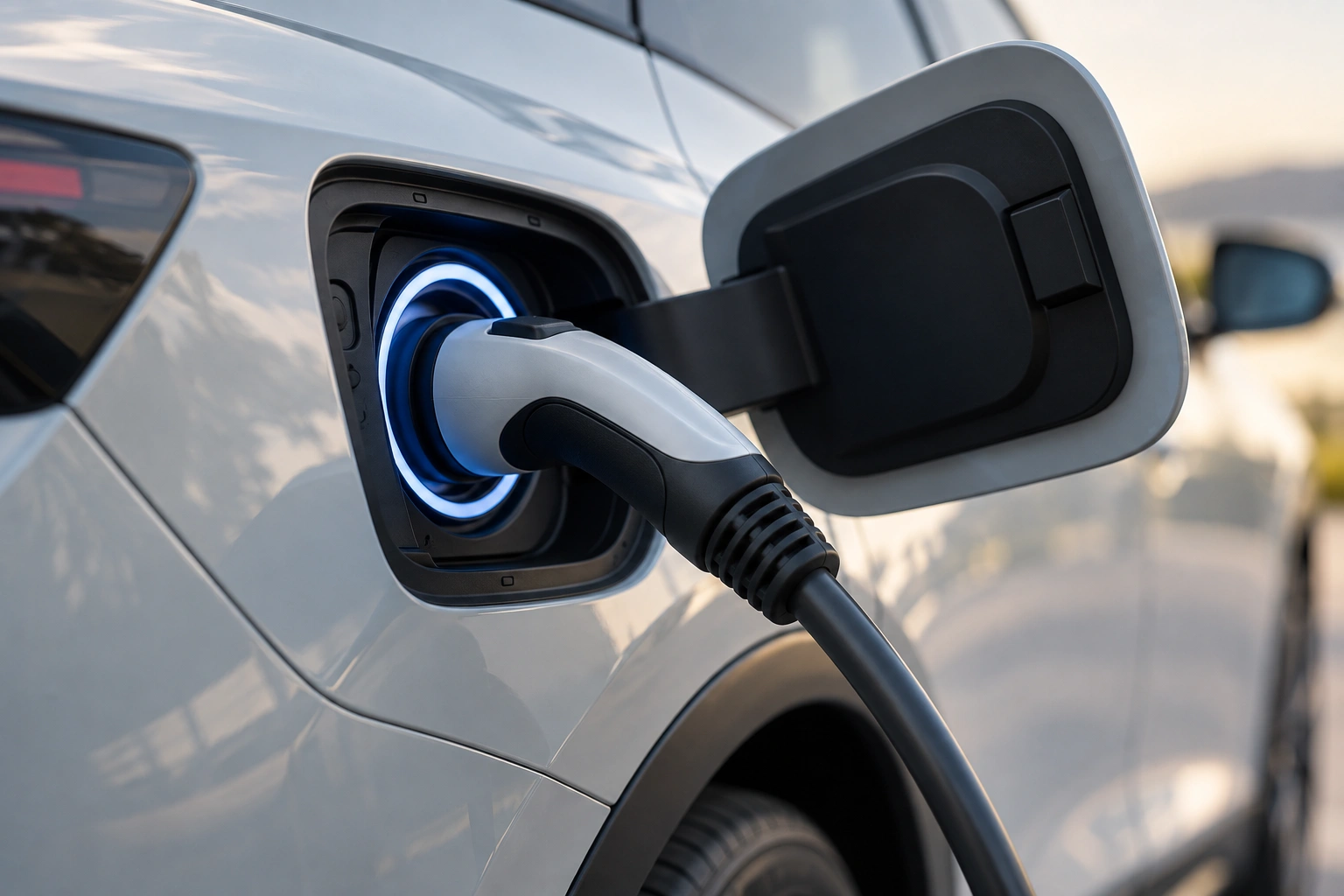
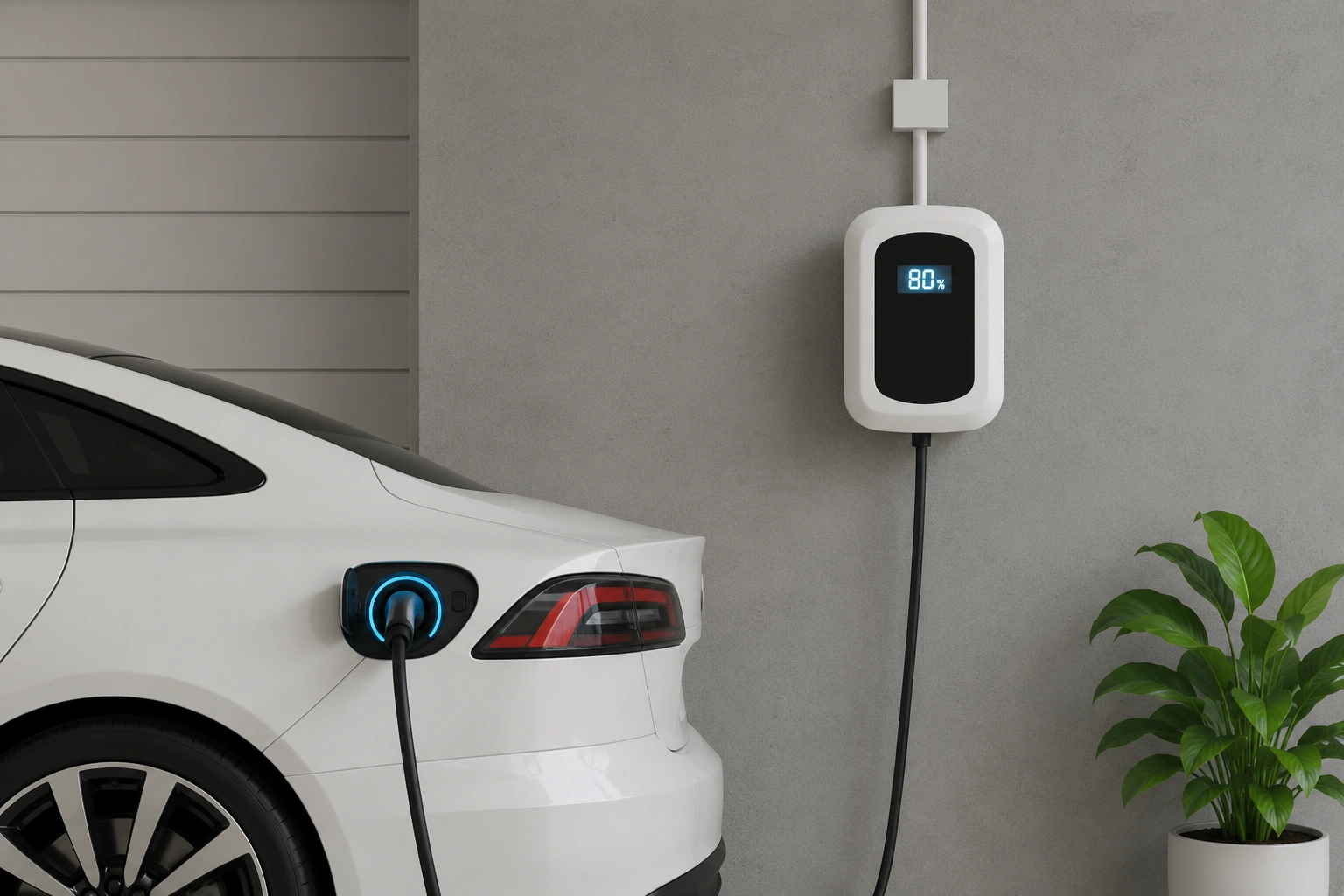
A socketed charger, often called an untethered charger, has a Type 2 outlet on the front instead of a fixed lead. You plug one end of your own cable into the charger and the other end into your car.
The wall unit looks cleaner and more compact because nothing hangs off it. You choose the cable length, and the same cable can come with you to workplace and public chargers.
Does Either Type Charge Faster?
No, and this is the most common misunderstanding we hear. Charging speed depends on four things:
- The charger's power rating
- Your home's supply (single-phase or three-phase)
- The dedicated circuit we install
- What your car can accept
Whether the cable is fixed or removable doesn’t change any of that.
There is one catch with socketed units. The charger can only deliver what the cable is rated for. A lower-rated cable will cap your charging speed, so it’s worth matching the cable to the charger from the start.
Tethered vs Socketed at a Glance
| Factor | Tethered | Socketed |
|---|---|---|
| Daily convenience | Plug straight in | Connect cable at both ends |
| Cable length | Set by the unit | Your choice |
| Appearance | Cable visible on wall | Clean, compact unit |
| Outdoor security | Cable stays exposed | Cable can be stored inside |
| Multiple EVs | Less flexible | Easier to share |
| Cable damage | Usually needs an electrician | Swap the cable yourself |
When a Tethered Charger Makes More Sense
A tethered charger is usually the right call if:
- You have one EV parked in the same garage or carport spot each night
- Anyone in the house needs to charge easily without handling loose cables
- You want charging to become a simple habit you don't think about
Most single-car households we work with in Doncaster East and Ringwood end up choosing tethered. The main thing we check is cable length. We measure from the planned mounting point to your car’s charge port, based on how you actually park. That way the lead reaches comfortably without stretching across the driveway or becoming a trip hazard.
If you’re still deciding where the unit should go, our EV charger installation service starts with a site inspection and switchboard capacity check. That means the placement suits both your parking and your power supply.
When a Socketed Charger Is the Better Fit
A socketed charger tends to work better if:
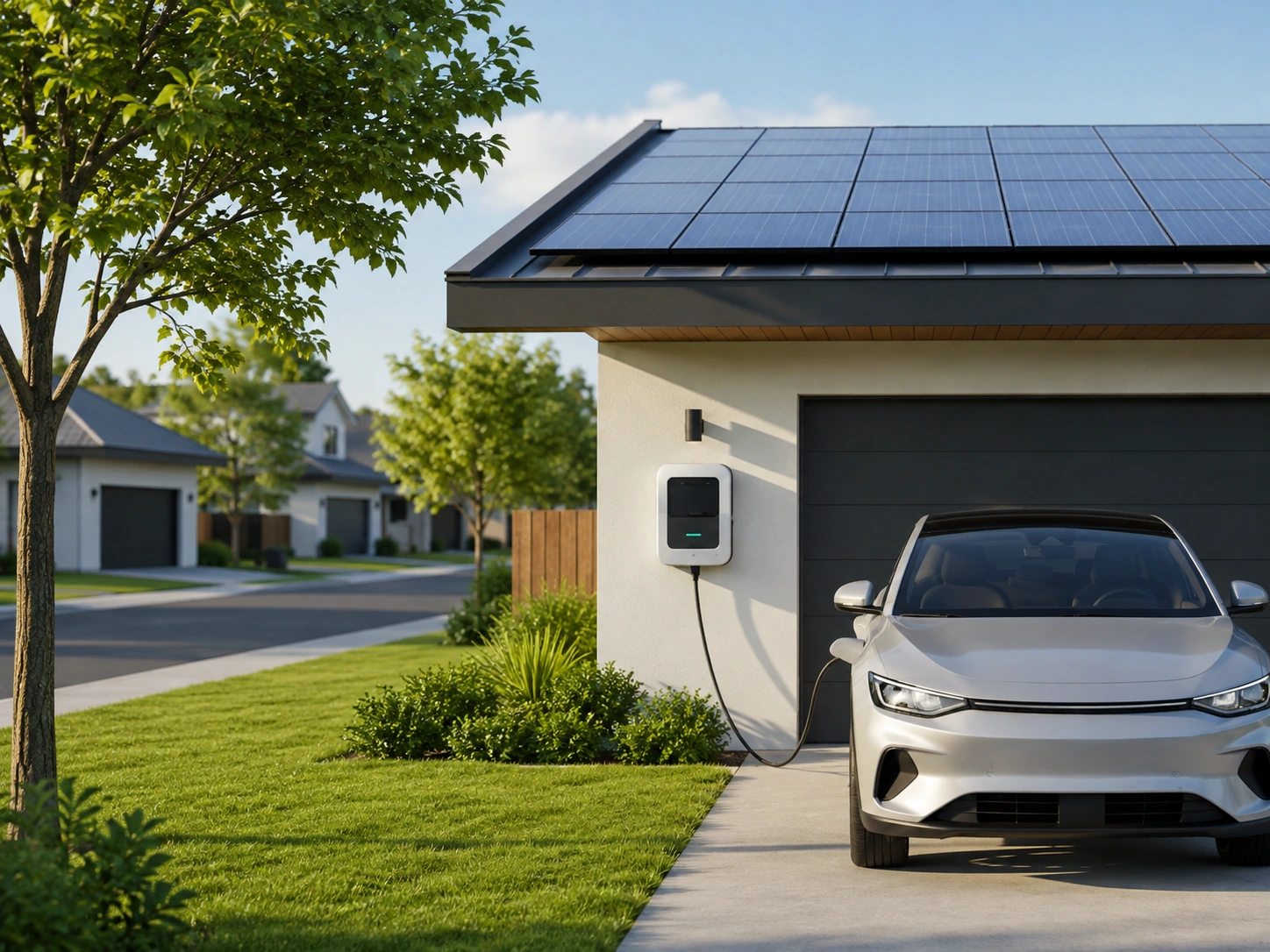
- The charger will be mounted outside and visible from the street
- You have two EVs, or cars that park in different spots
- You want a neater look on a front wall or feature wall
- The driveway is shared and you'd rather bring the cable inside
Security is a real factor for outdoor installs. A fixed cable hanging on an exposed wall can attract the wrong attention. A removable cable can be locked away in the garage. Many socketed units also lock the cable in place while charging, so it can’t be pulled out mid-session.
Cable wear is the other consideration. Cables get driven over, bent and left in the weather. With a tethered unit, a damaged lead generally means a service call to replace the cable or the whole unit. With a socketed charger, you simply buy a new cable.
What We Look at Before Recommending One
On every job, we check the details that affect the choice:
- Where you park now, and whether that's likely to change
- The distance between your switchboard and the mounting point
- Switchboard capacity and the dedicated circuit required
- Weather exposure, since outdoor units need a suitable IP rating
- Future plans, such as a second EV or solar panels
All wiring is installed to Australian standards and tested before we hand over. We also show you how the charger works, so you’re confident using it from night one.
So, Which One Should You Choose?
If you drive one car and park in the same spot, a tethered charger keeps life simple. If security, flexibility or a tidy look matters more, socketed is the better pick. Neither option is wrong. The best choice is the one that matches how your household uses the driveway.
Get the Right EV Charger Installed in Melbourne's East
Not sure which setup suits your home? Espresso Electrical’s licensed electricians service Donvale, Doncaster East, Ringwood, Nunawading, Blackburn, Mitcham and surrounding suburbs. We’ll assess your parking, your switchboard and your plans, then recommend the charger that fits.
Contact us today for a free, no-obligation quote.
Tethered or Socketed, We'll Install It Right
Whichever type you choose, it needs correct cable placement, a safe mounting spot and a proper connection to your switchboard. Our licensed electricians install both types across Melbourne.
Call Us On